 Hare and Moon Pottery
How it's made
Each body of work starts on the wheel. What happens next is what makes them different.
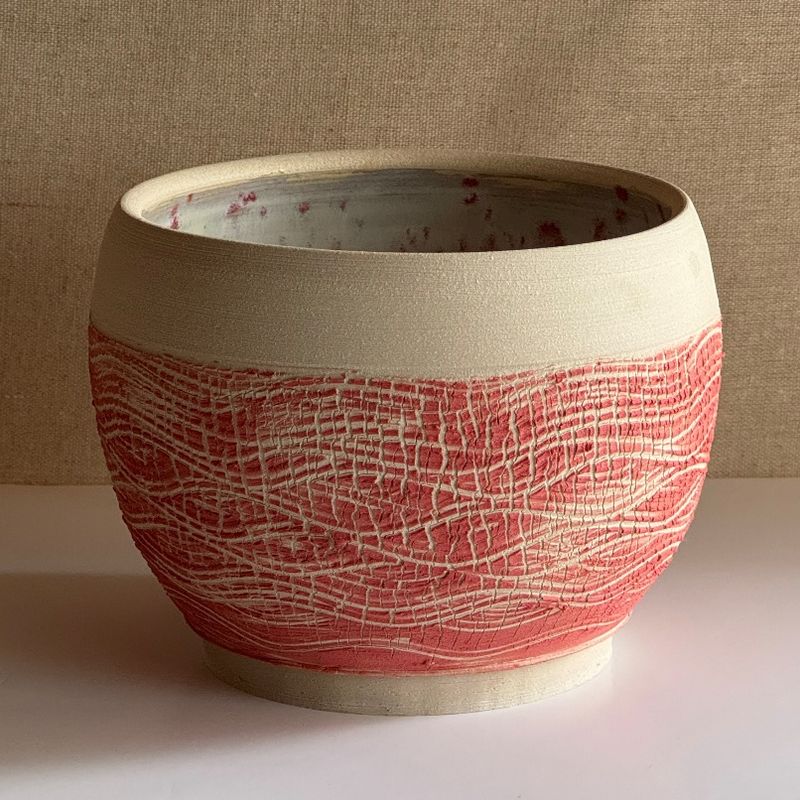
Waves
The Waves bowls and vases are inspired by the sea. I wanted to capture the energy of the sea on the outside of the pot, both visually and texturally.
Pots are made in the usual way on the wheel until I have a straight cylinder.
Then I apply a slip, often with either oxides or occasionally a stain, and sodium silicate.
I then use a homemade tool to create the wave pattern on the surface as the wheel is turning.
This is then torched until it is dry to the touch and the final shape is formed, stretching the clay and the coloured slip into the final form.
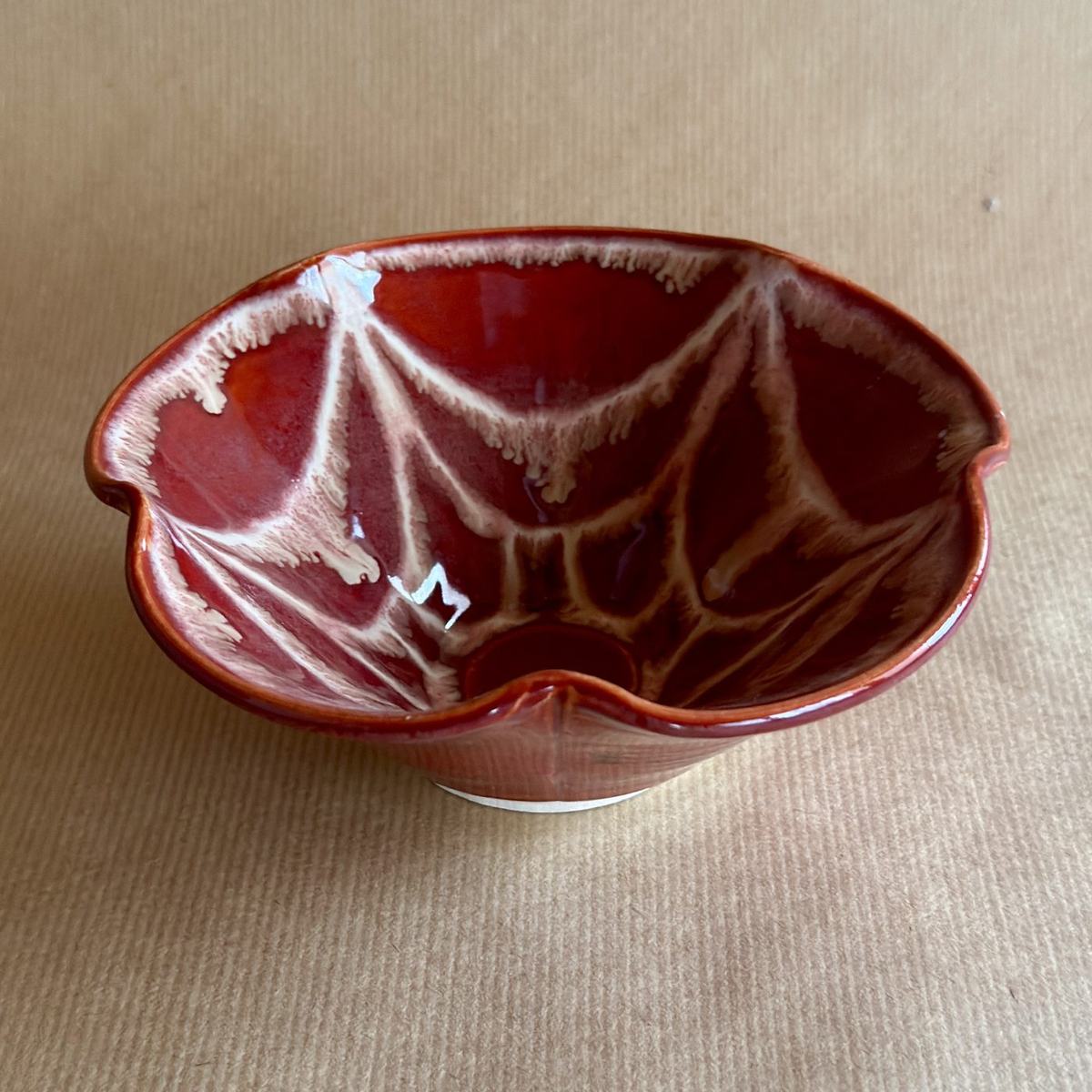
Kobachi
Kobachi are Japanese food bowls. Mine are five-sided, to mimic the shape of a flower.
They are made on the wheel, starting with a small cylinder that is then stretched out to a bowl about 14cm in diameter.
Then five points are marked gently and the space between them is carved away, making the five-pointed shape for the first time.
The rim is smoothed and the bowl is widened to about 18cm. Then a bamboo stick is used to indent the sections, making the petals more pronounced.
I play around with how much carving and indenting I do, which gives each bowl its own shape.
Most kobachi are glazed in bright colours, rather than in a traditional Japanese style.
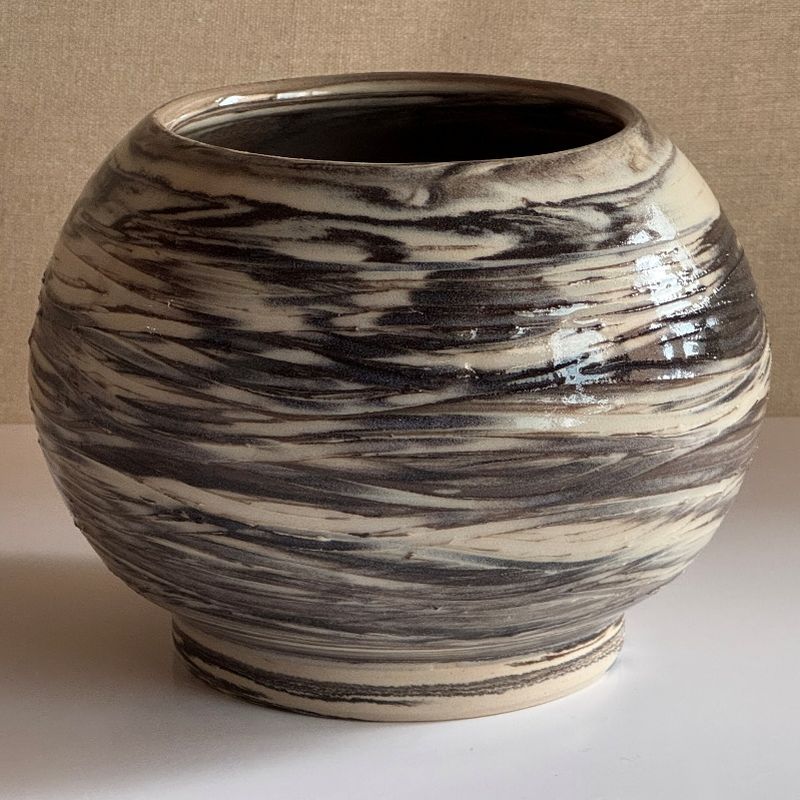
Agateware
Also known as nerikomi and marbleware, two or more different clays are combined before throwing.
The two clays can be coloured, or natural. I tend to prefer natural. Combining them requires a cut and slam technique to preserve the layers, as traditional wedging would blend them.
Then the clay is thrown on the wheel and scraped back to reveal the pattern before firing. Sometimes I will put a texture on the surface, and this can exaggerate the pattern by modifying the depth that you see of the two clays.
I have to think about shrinkage rates and firing impact, and sometimes the bowls distort.
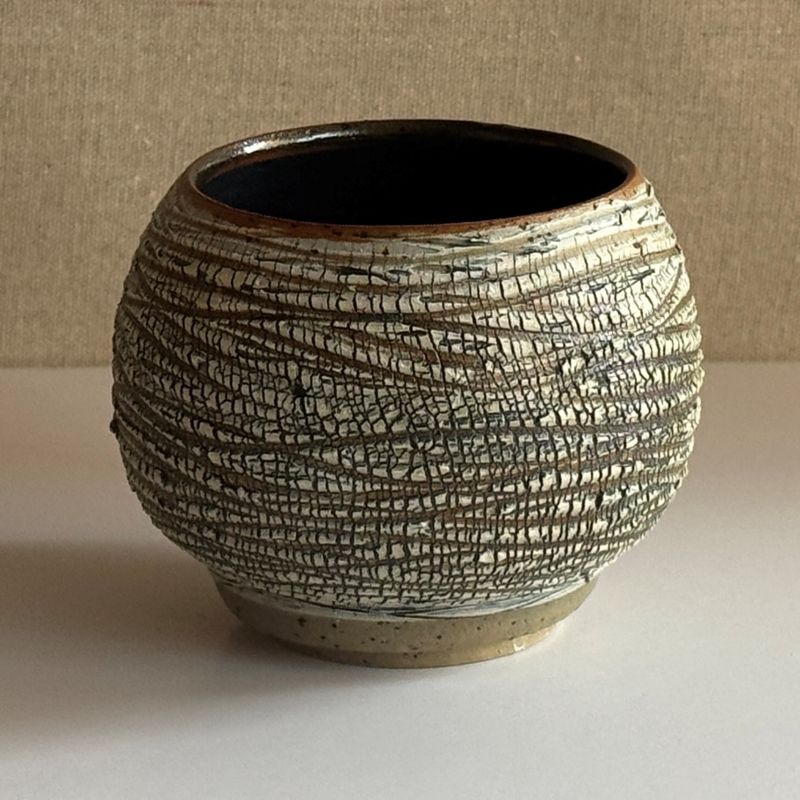
Crackle
Crackle is the collective name I give to all the pots that I make with a textured, cracked surface.
These are mostly, but not always, made by throwing a cylinder, applying sodium silicate, torching it, and then shaping the pot.
The sodium silicate sets like glass, so as the clay stretches it cracks and creates fissures in the clay.
Most often I will apply an oxide but no glaze to the outside, and I experiment with colours inside as a liner.
I am interested in exploring this technique and have tried many ways to make the effect, many shapes, and many finishes!